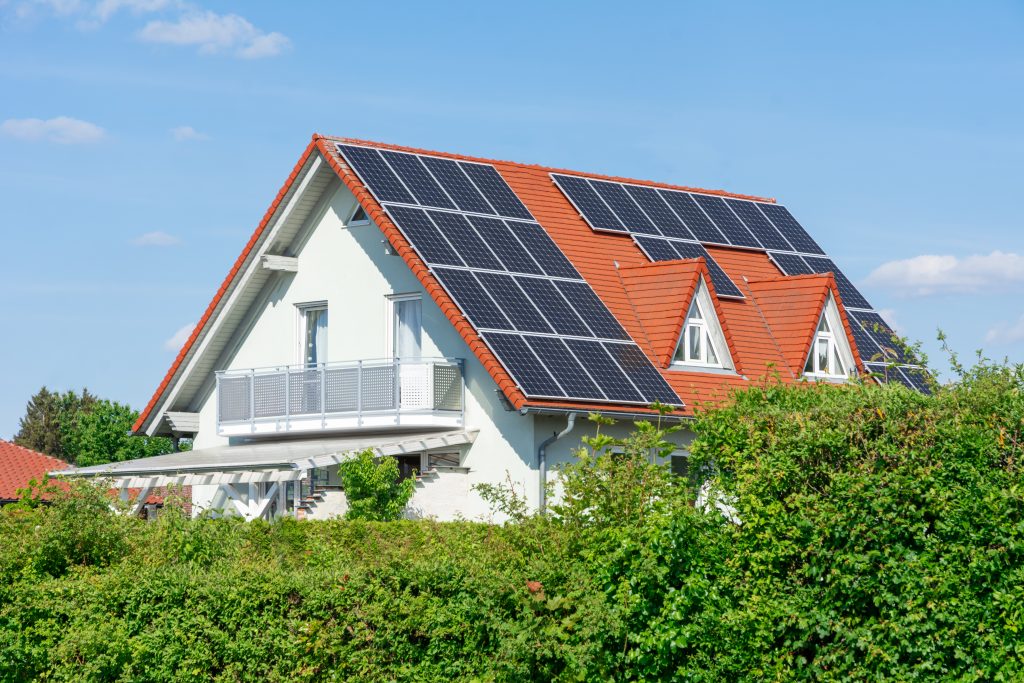
Solar panels generate most of their electricity during daylight hours, but many homes use the most power in the morning and evening. A solar battery closes that gap by storing surplus electricity for use later, helping households use more of the energy they generate and rely less heavily on the grid.
Greater energy self-sufficiency does not necessarily mean taking a home completely off-grid. It means giving homeowners more control over when electricity is stored, imported and used, with a system designed around the property rather than a one-size-fits-all package.
At a glance
- Store surplus solar electricity for use later in the day.
- Reduce the amount of electricity imported from the grid.
- Use suitable time-of-use tariffs more strategically.
- Support wider plans involving an EV charger or heat pump.
Monitor how electricity is generated, stored and consumed.
How Does a Solar Battery Work?
A typical solar panel and battery system works in five stages:
- Solar panels generate electricity. The property uses this power first.
- Surplus electricity charges the battery. Unused power is stored rather than being exported immediately.
- The battery supplies the home later. Stored electricity can be used when solar generation falls.
- The grid covers any remaining demand. The property imports additional electricity when the panels and battery cannot meet demand.
- Further surplus can be exported. When the battery is full, unused solar electricity may be sent to the grid.
The Main Benefits of Solar Battery Storage
Use More of Your Own Solar Electricity
Without battery storage, a household may export surplus electricity during the day and buy electricity back from the grid in the evening. A battery keeps more of that generation at the property, so it can be used when household demand is higher.
The design of a solar panel system should take account of the roof, expected generation and the household’s actual energy use. Battery storage then helps make better use of the electricity that system produces.
Reduce Reliance on the Grid
The more electricity a home can generate, store and use itself, the less it may need to import. This can provide greater control over household energy use and reduce exposure to peak electricity prices.
The realistic goal is not to promise complete independence. Solar output changes with the weather and seasons, while household demand may increase when heating, cooking or vehicle charging is needed. A properly sized battery helps reduce avoidable imports rather than removing the need for the grid entirely.
Make Solar Power More Useful After Sunset
Cooking, lighting, laundry and entertainment often increase electricity demand after solar generation has dropped. Battery storage shifts some electricity generated earlier in the day into these higher-use periods, making solar panels more useful without requiring the household to reorganise its entire routine.
Use Electricity More Strategically
Some battery systems can be charged from the grid. With a suitable time-of-use tariff, homeowners may be able to charge when electricity is cheaper and use the stored energy during a more expensive period.
The value depends on the tariff, battery capacity, household consumption, solar generation and system settings. The largest battery is not automatically the best choice. The important question is how well its usable capacity and power output match the home’s real energy pattern.
Support Wider Home Energy Improvements
Electric vehicles and heat pumps can significantly change how much electricity a property uses and when it is needed. Battery storage can form part of a wider plan involving solar panels, an EV charger, an air source heat pump, smart controls and any necessary electrical upgrades.
Our guide to solar panels and air source heat pumps explains why the most practical order of improvements varies from one property to another.
Understand How Your Home Uses Energy
Modern monitoring platforms can show how much electricity the panels generate, how much the home uses, the battery’s charge level and how much power is imported or exported. This visibility helps homeowners understand whether the system is working as intended and where energy use could be adjusted.
What Solar Batteries Cannot Do
Battery storage can improve the usefulness of solar electricity, but it is important to understand the limitations before investing.
- A battery stores electricity. It does not create it. Low winter generation may still lead to significant grid imports.
- Savings vary. Energy Saving Trust notes that savings will not always be enough on their own to justify the cost of the battery.
- Some energy is lost during charging and discharging, so using electricity directly from the solar panels is more efficient than storing it first.
- A battery normally has a shorter lifespan than solar panels and may need replacing during the life of the solar system.
- Backup power is not automatic. It depends on the battery, inverter and electrical design, and some systems only protect selected circuits.
How Do You Choose the Right Solar Battery?
The right system starts with the property, not the product brochure. An oversized battery may remain underused, while an undersized battery may fill early and leave useful surplus electricity to be exported. A proper recommendation should consider:
- Current electricity use. How much electricity does the home consume over a typical day and year?
- Timing of demand. Is most electricity used during daylight hours or later in the day?
- Available surplus. How much solar electricity is currently exported or likely to be available for storage?
- Usable battery capacity. How much stored electricity is available for normal household use?
- Power output. Can the battery support the expected level of demand at one time?
- Compatibility. Will it work correctly with the panels, inverter, monitoring equipment and electrical installation?
- Future plans. Could an EV charger, heat pump or extension increase demand?
- Installation location. Is there a safe, accessible and manufacturer-approved position?
- Warranty and support. What cover is provided for capacity, cycles, hardware and installation?
At Village Heating, we assess solar generation, electricity use, the existing electrical system and future plans together. This joined-up approach helps ensure that the recommendation is suitable for the property rather than based on headline capacity alone. Our battery storage service is designed around those practical requirements.
Can You Add a Battery to Existing Solar Panels?
In many cases, yes. An existing solar PV system can often be upgraded, but the panels, inverter, electrical supply, monitoring arrangements and available installation space should be checked first.
Installing solar panels and battery storage together can simplify the design. Retrofitting can also work well, particularly where the homeowner already has generation and export data showing how much surplus electricity is available.
Existing solar owners should continue to monitor output and keep up with routine maintenance. Our guide to improving solar panel efficiency throughout the year covers practical checks that can help protect performance.
What Happens When the Battery Is Full?
Once the battery reaches its maximum charge, further surplus solar electricity may be exported to the grid. Under the Smart Export Guarantee, eligible small-scale generators can receive payments from an electricity supplier for power exported to the grid, subject to the scheme’s criteria.
Rates and contract terms vary between suppliers, so homeowners should compare the value of using, storing and exporting electricity. A battery does not automatically create eligibility for export payments.
A Joined-Up Approach to Home Energy
Solar batteries improve home energy self-sufficiency by giving homeowners more control over when electricity is used. Their real value lies in helping a household use more of its own solar generation, reduce avoidable grid imports and prepare for wider changes such as EV charging or electric heating.
The strongest results come from looking at the whole property. Solar panels, battery storage, heating, hot water, EV charging and electrical capacity all influence the recommendation.
At Village Heating, we provide joined-up renewable energy solutions for homeowners across Uckfield and the wider East Sussex area. We assess the property and its future energy needs before recommending a practical system.
< BACK TO NEWS